Occupational Safety and Health
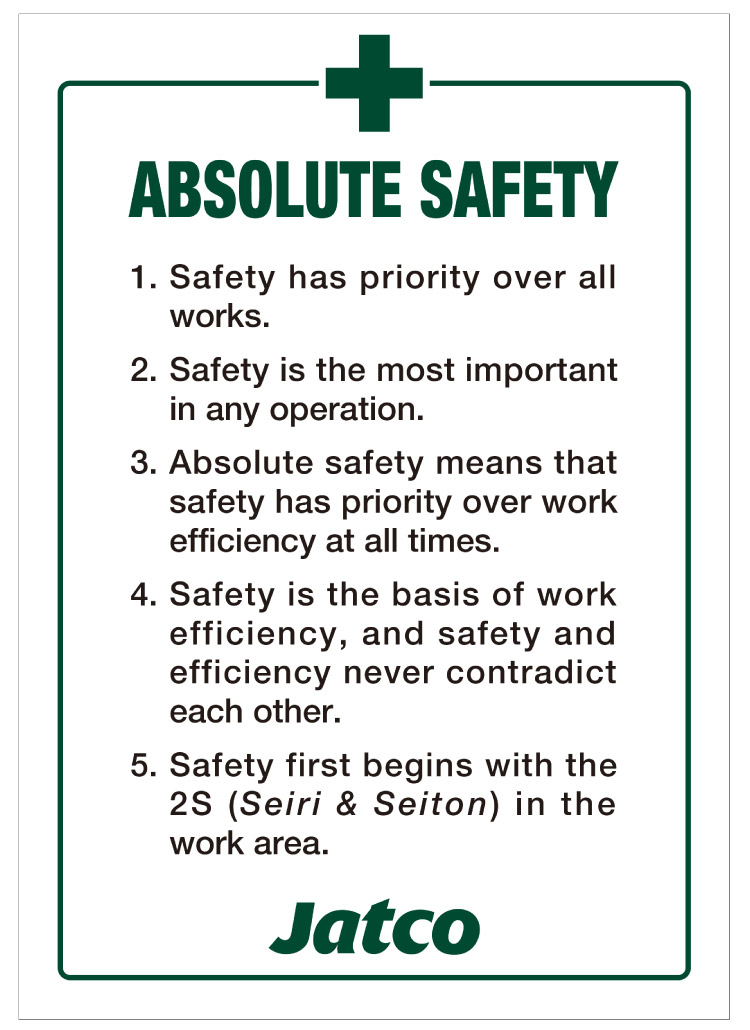
In order to achieve a workplace environment in which our employees can work safely, healthily, and enthusiastically, JATCO is working on the creation of workplaces with no accidents or fires and the development of people proficient in safety under the banner of “absolute safety” and working on continuous improvements to the physical and mental health of our employees under the banner “health management.”
Basic Health and Safety Management Policy
Implementation of health and safety activities in which each and every employee actively participates
Ensuring the health and safety of employees is the basis of our corporate activities.
Recognizing that these are important issues in our corporate activities and that any setbacks could affect the survival of the company, labor and management will work together to promote health and safety activities in which each and every individual actively participates.
Health and safety activities that lead to corporate development
By continuously ensuring health and safety, we aim to be a company that is trusted by employees, their families, our customers, and the community, where the employees can work with peace of mind.
To achieve this, we will efficiently pursue the inherent safety of equipment, improve the work environment and work methods, and advance education and training, aiming for zero work- related accidents, occupational illnesses, and traffic accidents, which will lead to the development of the company.
Initiatives to secure safety
The three pillars of safety activities
At JATCO, we have established the following three pillars regarding safety activities.
1. Development of people proficient in safety, 2. Realization of safe equipment/work methods, 3. Initiatives to prevent the recurrence of accidents
Firstly, we believe that “education” is an essential measure from the perspective of career development, so we repeatedly emphasize the importance of behaving safely and the scariness of unsafe conditions.
Secondly, we are carrying out “activities to eliminate non-standard processes” in order to realize safe equipment and working methods. The main purpose of the activities is to “eliminate non-standard processes,” but even after implementing physical measures we implement the activities in collaboration with the on-site workers for management until elimination.
Finally, as initiatives with respect to “preventing the recurrence of accidents,” we conduct comprehensive inspections of accidents which occurred in the past. We are carrying out activities to identify not only hard countermeasures but also soft countermeasures that can be implemented, and to ensure that accidents are not forgotten.
Developing people who are proficient with safety
Raising the safety level for employees overall
The plants have continued to take the lead in implementing safety activities based on Safety CAPDo*1 activities, but the situation is that accidents both requiring and not requiring time off work are continuing to occur.
We analyzed the factors behind the accidents occurring from the perspective of the 4M*2 and in the results the following four points came into sharp relief.
1. Lack of safety knowledge 2. Lack of danger sensitivity 3. Lack of confirmation in daily work 4. Overlooking of accompanying work
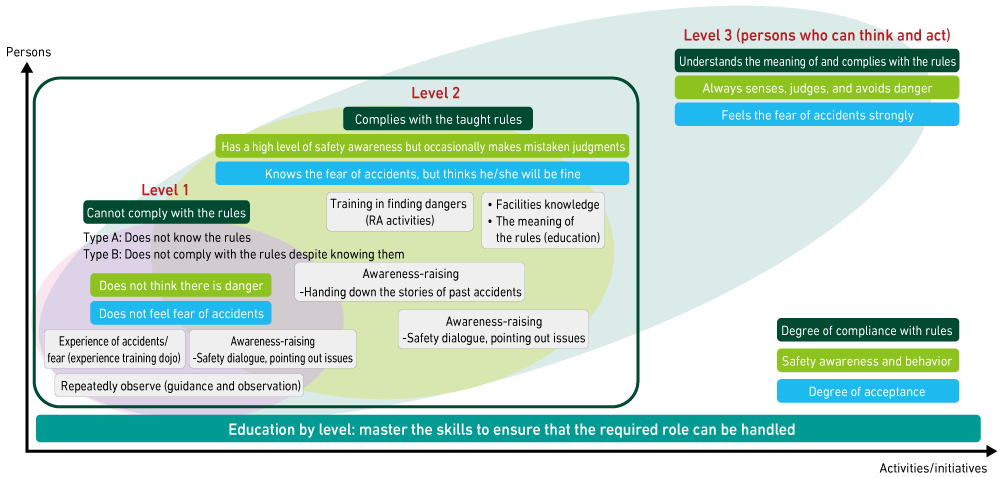
Regarding the basic axis, Safety CAPDo, we have given the first priority to raising danger sensitivity without making any changes (Level 1) and have stipulated Level 2 as increasing the propensity to take risks and additionally to abide by company rules.
Furthermore, we have defined Level 3 as employees who understand the meaning of the safety rules and can always sense, judge, and avoid danger, and we are currently working hard on safety activities every day with the goal of employees becoming Level 3 “persons who can think and act.”
*1 CAPDo: In contrast to the PDCA method of creating a plan first, this improvement cycle method changes the order of PDCA and starts with “C (Check = ascertain the current situation)”
*2 4M: A framework named by taking the initial letter of the four elements of Man, Machine, Material, and Method
“Developing people who are proficient with safety” ideal state
Renovating the safety experience training dojo
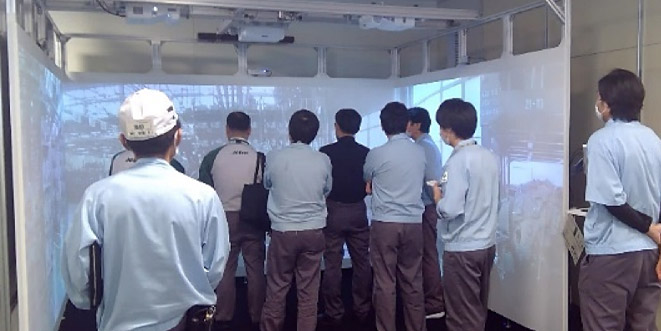
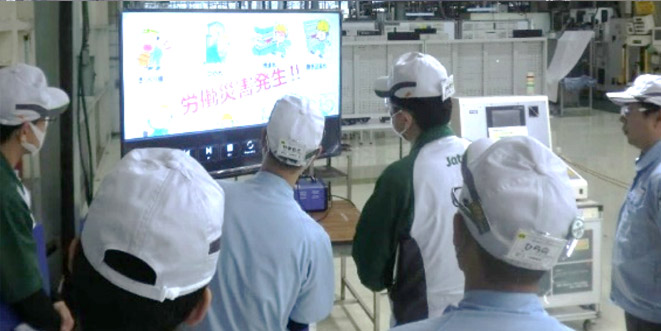
We provide experiential education at the safety dojo with the goal of providing emotionally compelling education that allows employees to recognize danger and experience the fear of unsafe behavior and unsafe conditions. The content of the education is created based on actual near misses and accidents that have occurred.
Furthermore, for accident/near miss cases that would entail danger if they were actually recreated, we have introduced a theater-style experiential education tool. This enables the trainees to experience danger in a virtual space, as if they were actually present and working in that space.
Implementation of occupational safety and health education
(1)Education to enhance skills with respect to hazardous substances
We develop qualified personnel in-house by implementing skills courses based on the Industrial Safety and Health Act.
| Persons eligible for the courses | Number of qualified personnel | |||||
|---|---|---|---|---|---|---|
| Persons engaged in work handling hazardous substances | 148 people | |||||
| In-house certified safety auditors | 2,660 people | |||||
| As of the end of March 2025 | ||||||
(2)Safety education by level
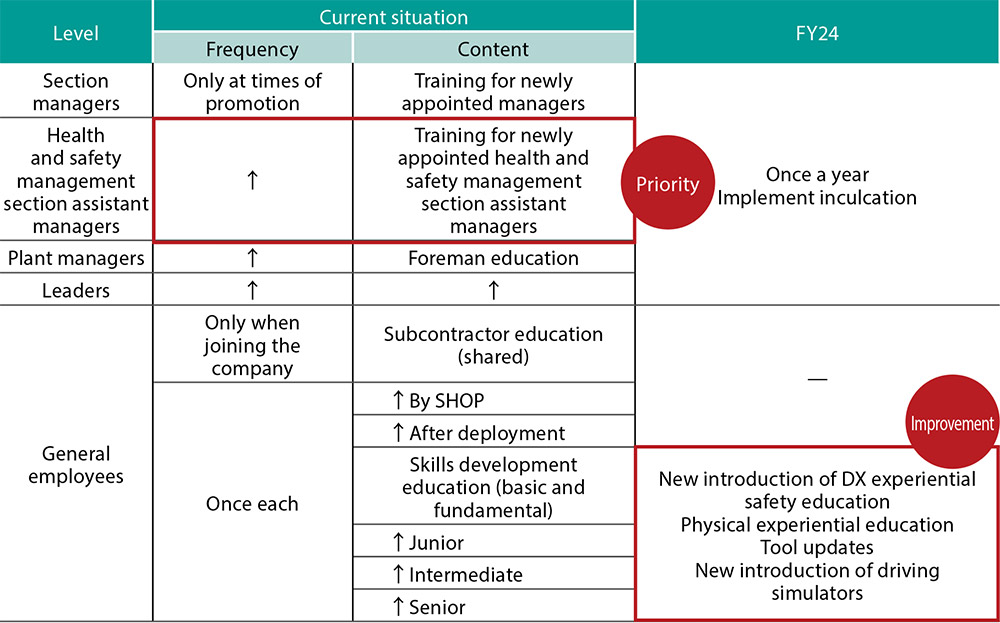
Section managers and also health and safety management section assistant managers, plant managers, and leaders are required to receive safety education once a year.
Particular emphasis is placed on training for newly appointed health and safety management for the health and safety management section assistant managers who are present as the people responsible not only for on-site guidance but also for safety and health activities for employees in their divisions and sections.
About the safety education system and our priorities
Realization of safe facilities/work methods
Safety activities tackled by all of our employees
We recognize the task of ensuring safety as a priority in all our work, and have established “Absolute Safety” as our motto. In line with this, we engage in safety activities with a focus on on-site inspection, such as risk assessments, SES I*1, 5S patrols*2, plant (division) safety patrols, public work inspections, and safety specialist inspections by agilely (adaptably and quickly) applying Safety CAPDo in order to move from zero accident to zero danger workplaces.
*1 SES I (Safety Evaluation System I): Our system for quantitatively assessing safety levels at the workplace
*2 5S patrols: Patrols of our sites on a regular basis to ensure compliance with the 5S methodology (Seiri [Sort], Seiton [Set in order], Seisō [Shine], Seiketsu [Standardize], Shitsuke [Sustain])
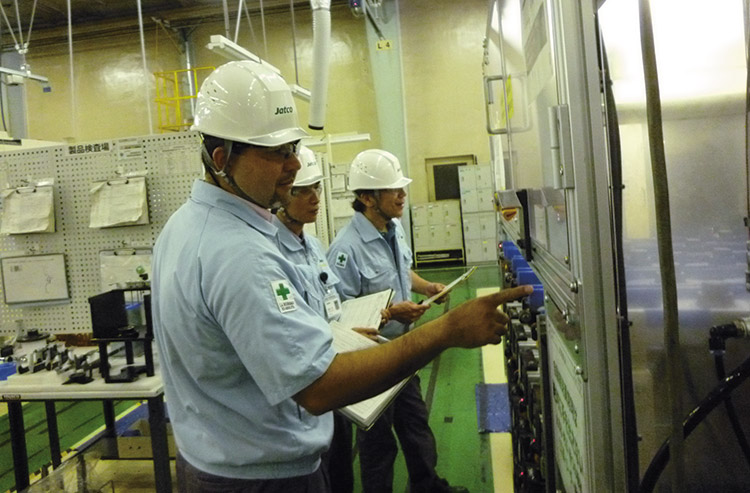
Eliminating non-standard processes
Particular emphasis is placed on eliminating non-standard processes that have a high risk of causing work accidents and may also cause losses in our production activities.
The assessed risks of each production activity are summarized in a list. We establish the degree of priority and the appropriate countermeasures based on the size of the risk, and then speedily implement essential safety countermeasures (hard countermeasures, such as improving facilities), and soft countermeasures, such as training and guidance.
Additionally, by revitalizing risk assessment activities in the workplace, we are promoting the creation of workplaces in which all of our employees can work safely and comfortably.
Deployment of health and safety management section assistant managers
We have deployed a dedicated health and safety management section assistant manager to each of the production sections in order to provide specialized management of health and safety management. They have responsibility for the safety/fires/traffic accidents/health management of their section, and they have the duties of listening to feedback from their colleagues working in the workplace and making improvements.
As experts, they are aiming to construct a strong health and safety network both inside and outside the company in order to build a team whose members absorb the good things from each other. They are also taking on the challenge of creating a culture where the employees “take action immediately,” “praise what is good,” and “say no to what is bad” by speaking to each other about diverse ideas which are oriented toward the outside world.
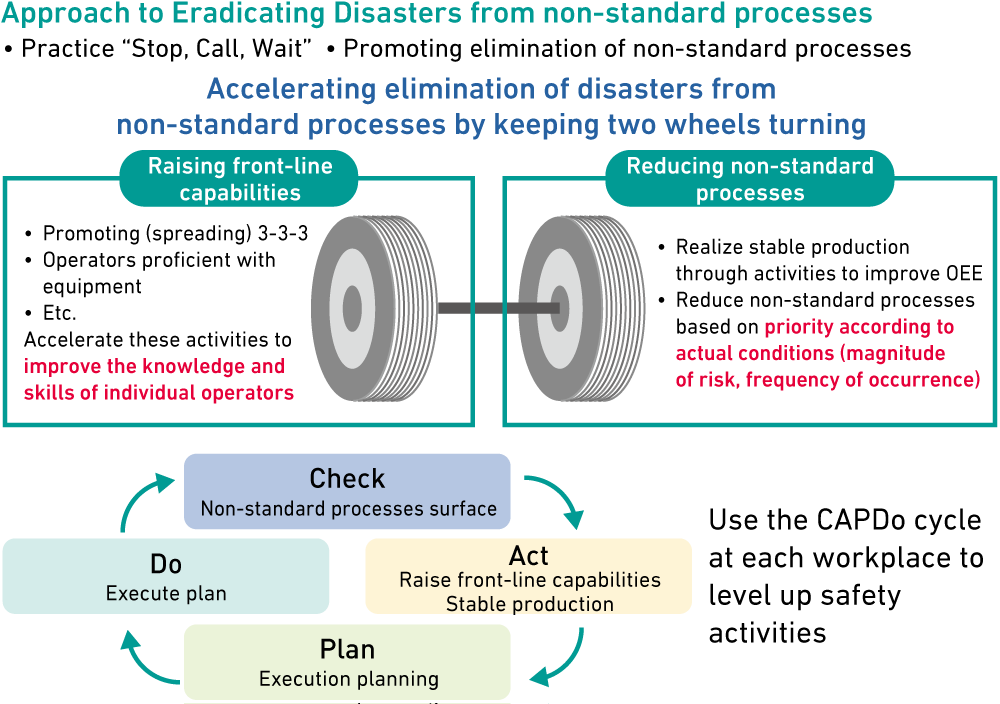
Initiatives to prevent the recurrence of accidents
Comprehensive inspection activities for the horizontal rollout of accidents which occurred in the past
There are activities in which, in order to prevent accidents from recurring, the Safety & Health Administration cooperates with the health and safety management section assistant managers of each section to check and follow up on the status of the countermeasures that have been horizontally rolled out throughout the company, regarding whether they have penetrated the work sites and whether the countermeasures are being implemented on an ongoing basis. The main purpose of the activities is to prevent accidents from recurring, but a comprehensive inspection is also carried out, including OJT (danger awareness) for newly assigned colleagues.
Creating a safety culture which is not forgotten
In addition to the above, the Safety & Health Administration distributes past accident cases with the title of Accident Memorial. In order to ensure that lessons learned from accidents which occurred in the past are not forgotten and to ensure the same accidents do not occur repeatedly, each month we distribute to all of our employees the industrial accidents which have occurred at the company over the past ten years as accident examples which occurred in that month.
We create time for all of our employees to think about accidents, such as by raising awareness at morning meetings in each division as part of our daily safety activities.
Safety activity management metrics
Accident occurrence status
| Year | Category | Results |
|---|---|---|
| 2024 | Fatal accidents | 0 |
| Accidents requiring time off work | 0 | |
| 2023 | Fatal accidents | 0 |
| Accidents requiring time off work | 1 | |
| 2022 | Fatal accidents | 0 |
| Accidents requiring time off work | 0 |
Injury in the course of employment (accidents requiring time off work frequency rate*3)
| Category | Results | All industries*5 | JAMA*6 | |
|---|---|---|---|---|
| 2024 | Accidents requiring time off work frequency rate | 0.000 | 2.10 | ー |
| Severity rate*4 | 0.000 | 0.09 | ー | |
| 2023 | Accidents requiring time off work frequency rate | 0.093 | 2.14 | ー |
| Severity rate*4 | 0.005 | 0.09 | ー | |
| 2022 | Accidents requiring time off work frequency rate | 0.000 | 2.06 | 0.07 |
| Severity rate*4 | 0.000 | 0.09 | 0.002 |
*3 Accidents requiring time off work frequency rate: Number of casualties due to work accidents per 1 million actual working hours [(number of casualties / number of actual working hours) x 1,000,000]
*4 Severity rate: this is the total number of workdays lost per 1,000 actual working hours, and expresses the extent of the seriousness of the accident
*5 Source: Ministry of Health, Labour and Welfare statistical tables
*6 Source: Japan Automobile Manufacturers Association (JAMA) (14 companies)
Scope: JATCO Ltd
Initiatives for health management
Declaration on Health Management
The JATCO Group considers the physical and mental health of employees to be an invaluable asset of the company. We have established the JATCO Group's Declaration on Health Management, intending to be a company where employees can work enthusiastically and comfortably.
The JATCO Group's “Declaration on Health Management”
Developing advanced products that reflect the needs of our customers by enabling each and every employee to demonstrate their leadership. Improving manufacturing technology to achieve a level of quality exceeding that of our global competitors. Contributing to the revitalization of communities by running our business fairly and valuing our connections with local communities. These are the driving forces that give energy to every JATCO Group employee.
Such energy is founded on our employees' physical and mental health.
The JATCO Group considers the well-being of its employees to be invaluable assets, so we aim to promote the well-being of both our employees and our company by working to improve quality of life (QoL) so that employees can feel fulfilled, both in and out of the workplace. We believe that ensuring the health of every employee and their family is not only the cornerstone of the JATCO Groupʼs continued growth, but also an answer to societal demands for extending healthy life expectancy.
Acknowledging health care as a significant management task, the JATCO Group declares it will continue working to promote the health of each and every employee and become a company with a healthy and supporting work environment.
Tomoyoshi Sato
President and CEO of JATCO Ltd
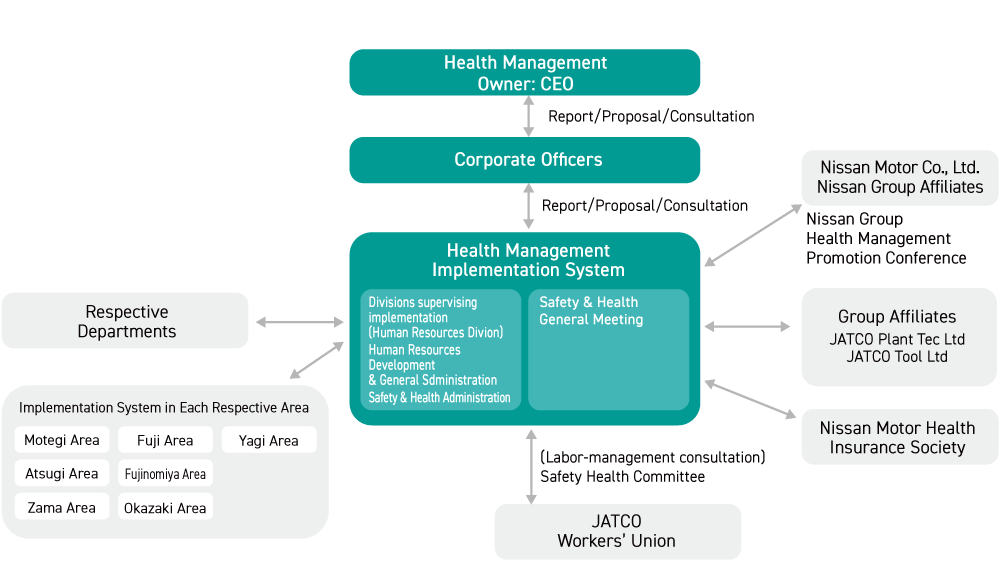
Health management implementation system
External evaluations
JATCO has been a Certified Health & Productivity Management Organization (White 500) for seven consecutive years since 2019.
For two consecutive years, from 2024 to 2025, we received a toptier evaluation, ranking in the top 1 to 50 in the Survey on Health and Productivity Management.
We have been certified as a “Sports Yell Company 2025” by the Japan Sports Agency. This is our fourth certification, having been certified for the first time in February 2021.

Lifestyle improvement
Health-building events and health education
We continually implement health promotion activities in order to help employees establish better lifestyles with respect to the health risks they face. We hold fun, hands-on, participatory events at each location with the aim of enhancing health awareness.
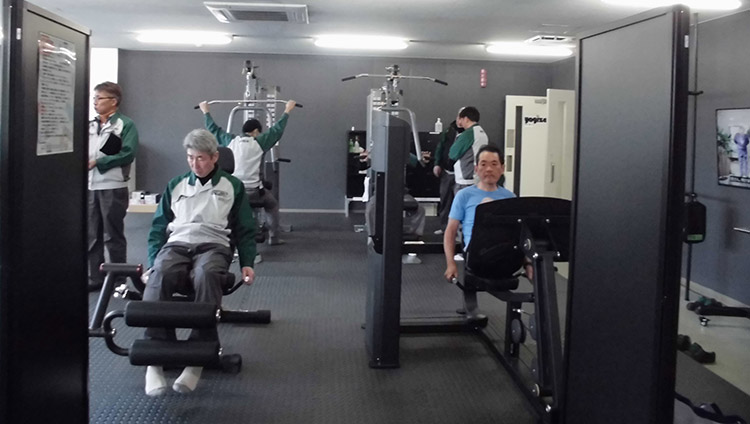
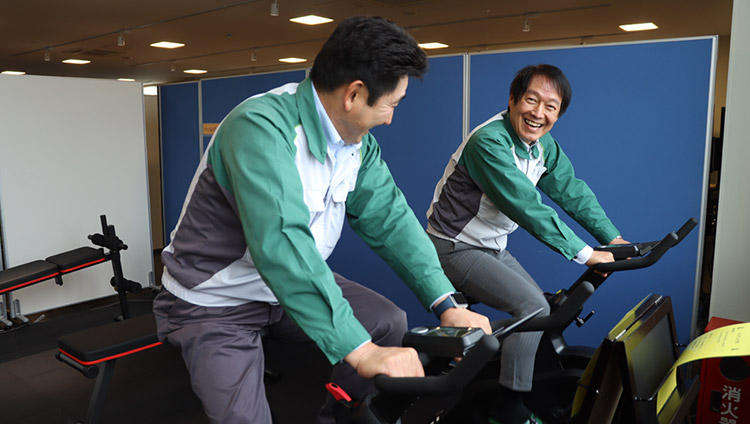
In-house gym
We have installed a training gym inside our location to create an environment where even people who have not previously had the habit of exercising can exercise easily.
Health-building events: 2,088 participants
Food education events
・Provision of a healthy menu
Walking events
・Establishment of routes for employees to visit local attractions and shops with their families
Physical fitness measurement
・Maintenance and enhancement of physical fitness for aging
Health education: 1,583 participants
Education on health issues specific to women / Education on sleep
・Implementation of education to enhance knowledge of health issues
Education by age group
・Lifelong health improvement activities adapted to changes in life stages and workplace environments
In-house gym: 384 participants
We have installed a gym in-house where all of our employees (including the related contractors) can exercise at their leisure
Measures to Reduce Smoking
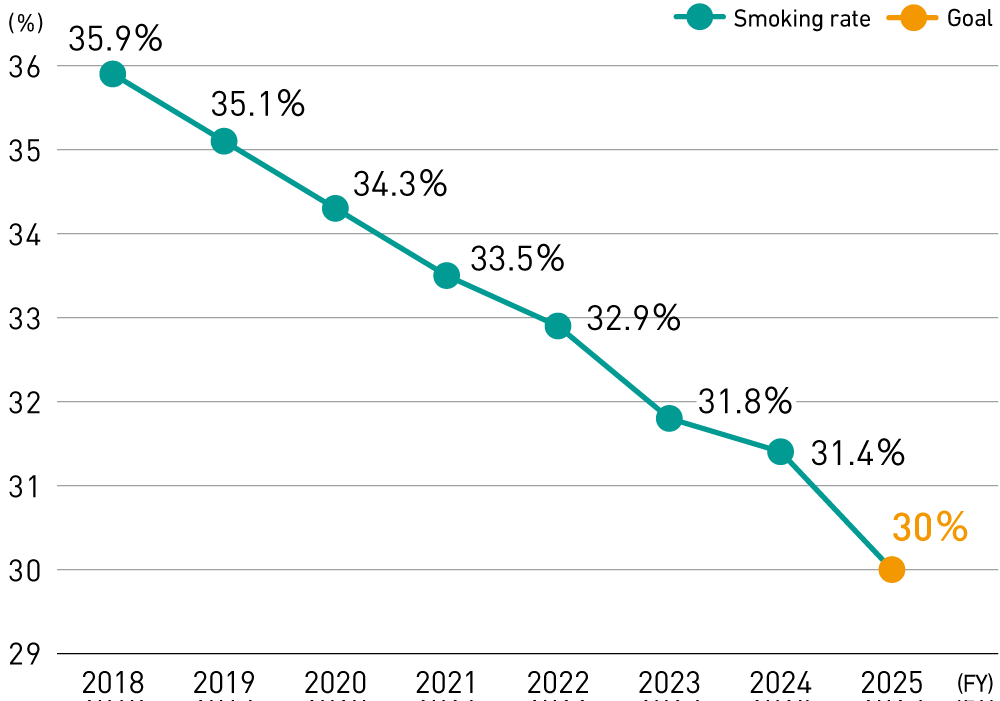
Our company, including the group companies, started taking measures against smoking from 2003, with full-scale segregated smoking activities starting from 2007, the establishment of non-smoking hours from 2013, and a smoking ban on our premises (inside our site) since 2017. We are also implementing “move beyond smoking (quit smoking)” activities for smokers, such as interviewing former smokers, distributing smoking cessation gum, and opening an in-house smoking cessation clinic.
As a result, the smoking rate among our employees is gradually decreasing.
Our goal is to reduce it to 30% by 2025.
Trend in the smoking rate
Initiatives for mental health measures
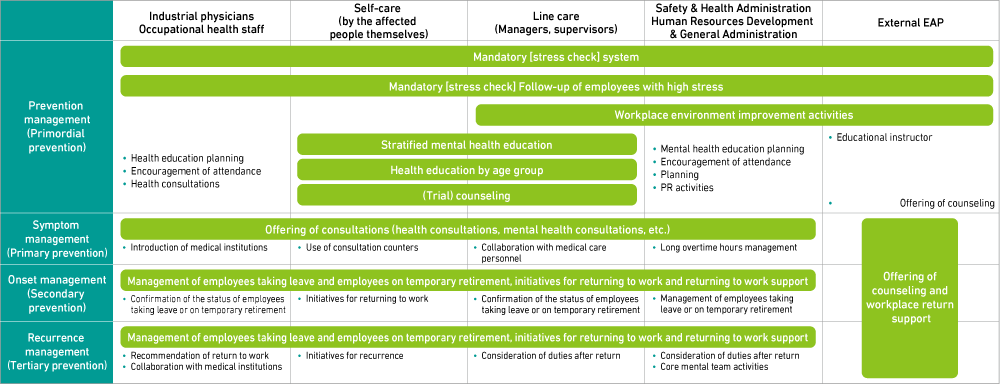
JATCO has developed mental health support measures for employees, managers and supervisors, occupational health staff, and the Human Resources Division, and is tackling the acquisition of and penetration of understanding of basic knowledge about mental health, knowledge about stress management (self-care), and knowledge about how to deal with subordinates (line care). Since FY2018, as one of its health management activities, the company has been implementing initiatives with a greater awareness of PDCA and approaches to the sense of psychological burden that comes with changes to and diversification of work styles, such as working from home.
Health management activity management metrics
| FY22 | FY23 | FY24 | ||
|---|---|---|---|---|
| Absenteeism | Number of employees taking leave for physical reasons per thousand | 2.6 | 2.6 | 1.8 |
| Number of employees taking leave for mental reasons per thousand | 7.4 | 6.9 | 8.8 | |
| Presenteeism |
At the same times as the stress checks, employee surveys are regularly conducted using the WHO-HPQ absolute presenteeism scale (0 to 100 points (%)). The actual value is computed by calculating the loss percentage and averaging it across all of our employees, with higher values indicating greater losses. The actual value is the average for all of our employees (%). |
37 | 36 | 36 |
| Work engagement |
At the same times as the stress checks, we regularly conduct Venta Original employee surveys, which are highly correlated with the Utrecht Work Engagement Scale. The actual value is computed by taking the average of the deviation values across all of our employees, with higher values being better. The actual value is the average for all of our employees (%). |
47.8 | 48.2 | 48.7 |
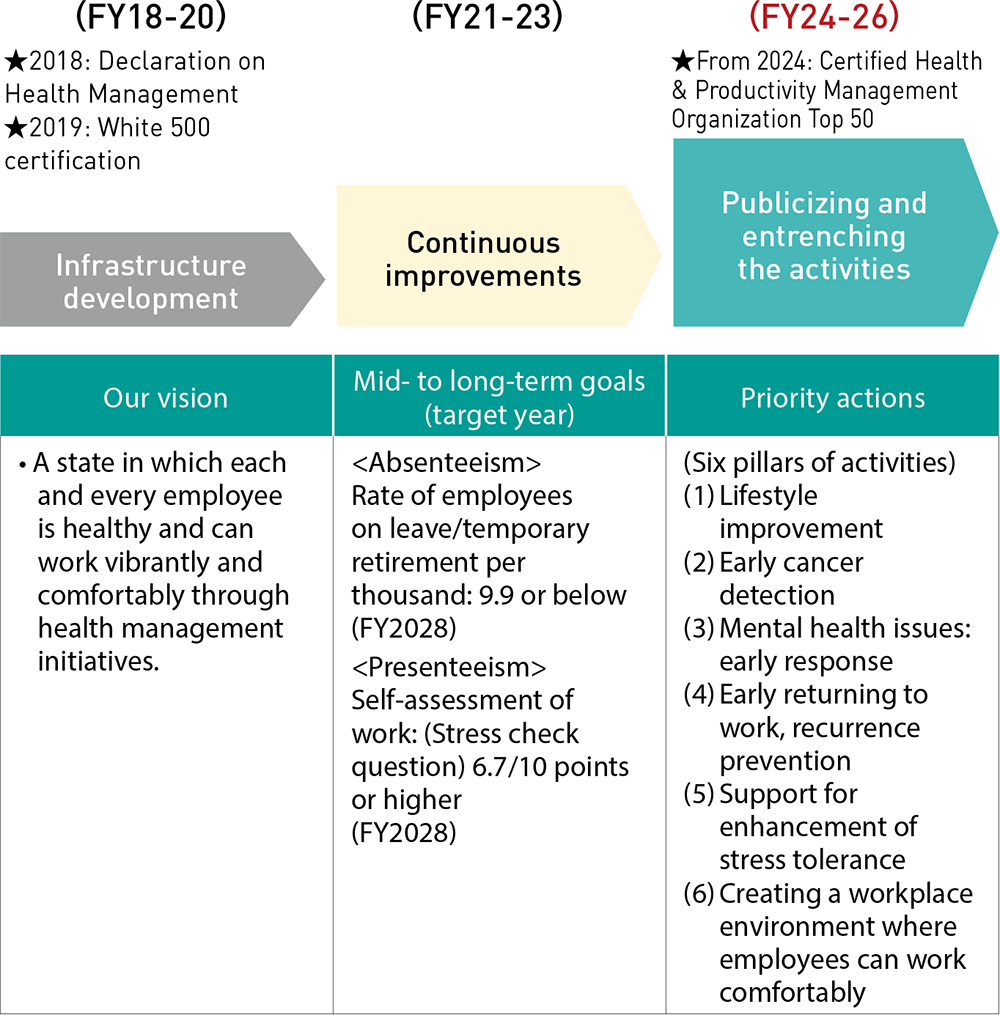
Medium-Term Health Management Plan
We formulated a medium-term plan in order to achieve the vision aimed for by the Declaration on Health Management, and we are implementing activities based on the six pillars of JATCO health management.