Promotion of Decarbonization
Message
With the frequent occurrence of extreme weather eventsand large-scale disasters making the world acutely aware of the severity of global warming, JATCO has positioned the realization of carbon neutrality as a company-wide priority and set CO2 reduction as a company-wide KPI.
Specifically, we are focusing on expanding the adoption of renewable energy and improving the efficiency of our electricity use to reduce our dependence on fossil fuels inproduction activities. In development and after-sales services, JATCO is also considering CO2 emission reductions across the entire life cycle of products, including electric vehicles.
It is essential for the environment that we resolve this dilemma of reducing CO2 emissions even as the demand for energy grows due to increased economic activity and individuals’ pursuit of greater freedom and convenience. JATCO will continueto meet society’s expectations and fulfill its mission with responsibility.
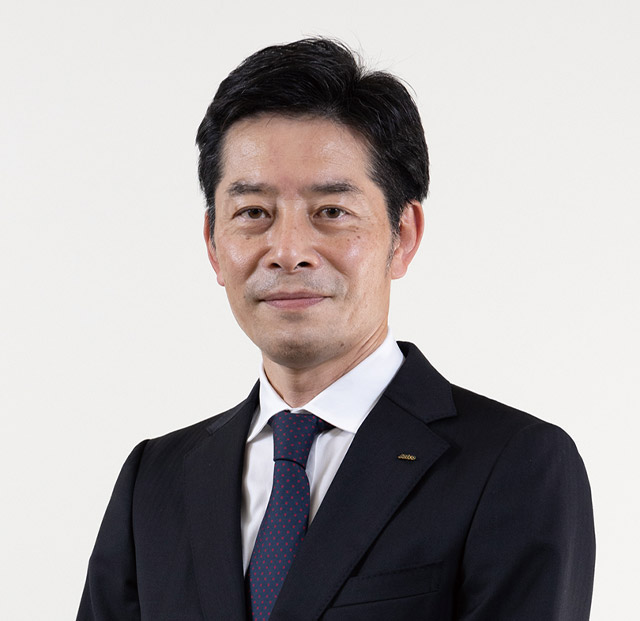
Corporate Planning
Division VP
Hiroyuki Kai
Carbon Neutrality Initiatives
JATCO aims to achieve carbon neutrality across its entire value chain by 2050, focusing on initiatives in the four areas of entire life cycle, production, product development, and environmental activities.
Total Product Life Cycle Initiatives
We assess our environmental impacts, from raw material procurement to recycling, and strive to reduce CO2 emissions.
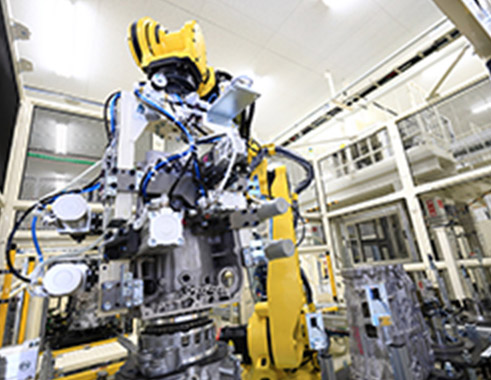
Production Initiatives
We are working to realize smart factories through digital transformations (DX) and innovative technologies, and to reduce the CO2 emissions through energy conservation and the adoption of renewable energy.
Product Development Initiatives
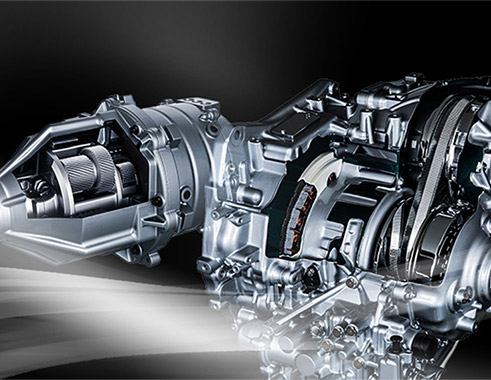
We work on improving the efficiency of our existing products and developing new products for next-generation vehicles, contributing to the reduction of CO2 emissions.
Environmental Activities and Other Comprehensive Initiatives
We will strengthen comprehensive initiatives such as environmental activities in concert with local communities and NPOs, and fulfill our responsibility as a good corporate citizen to reduce carbon dioxide.

Carbon Neutral Steering Committee
In order to formulate strategies and assess progress towards realizing carbon neutrality, the Committee, with the participation of the responsible executives in four areas and the CEO as the chairman, aims to quickly solve problems and invigorate companywide activities through support and decision-making.


FY2024 CO2 emissions results (Global)Unit:t-CO2
| Base | Scope1 | Scope2 | Total |
|---|---|---|---|
| Japan | 27,061 | 103,240 | 130,301 |
| Overseas | 3,326 | 75,440 | 78,766 |
| Total | 30,387 | 178,680 | 209,067 |
Total product life cycle efforts
Supply chain area (Procurement)
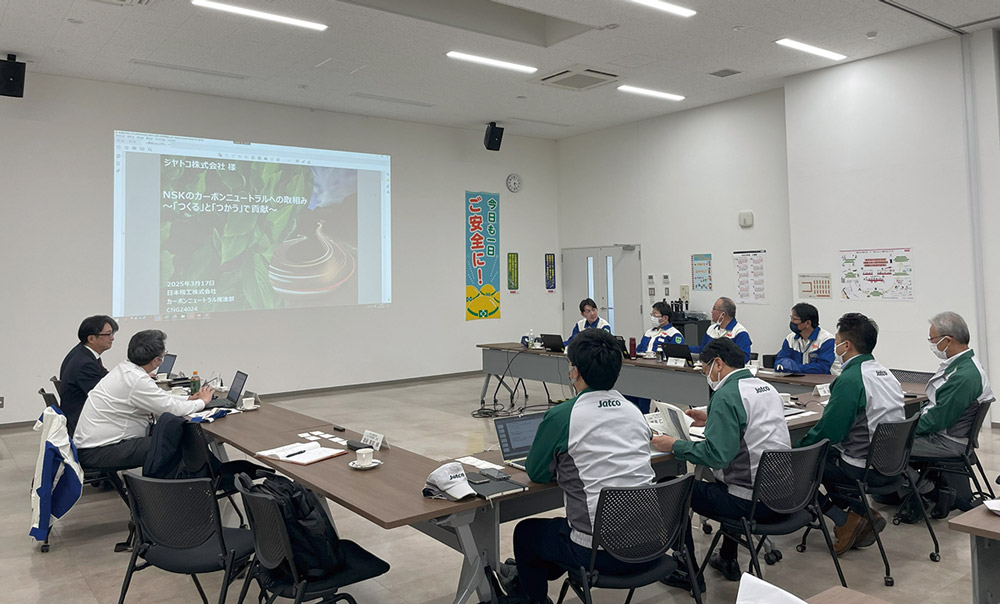
JATCO is promoting the visualization of CO2 emissions in Scope 3(Category 1) to achieve carbon neutrality across the entire supply chain.We facilitate activities by providing opportunities for information exchange with our business partners where we share each other’s initiatives. For business partners requiring support, we provide opportunities to discuss their situations at any time and work together to solve problems.
Supply chain area (Logistics)
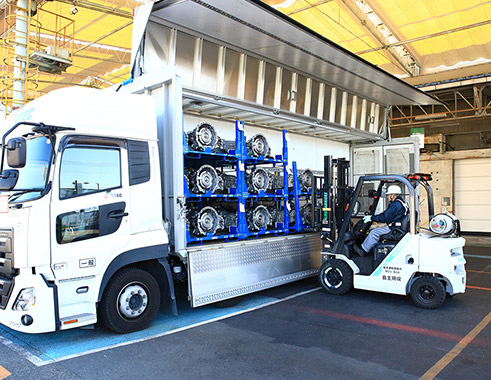
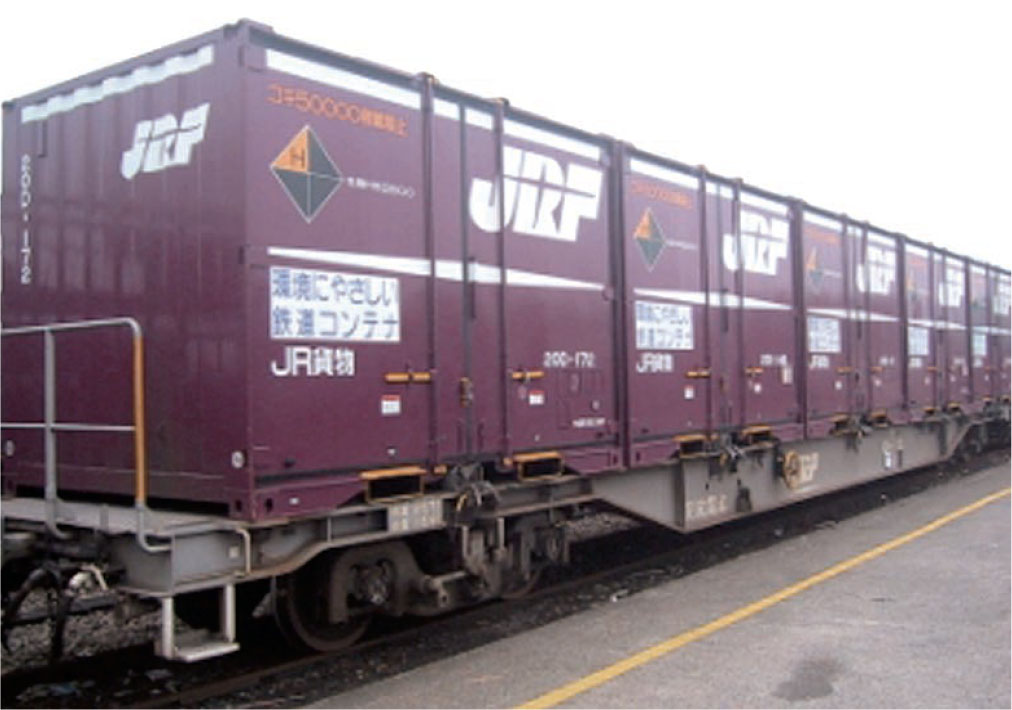
With the aim of reducing CO2 emissions, JATCO utilizes green logistics when transporting parts. From 2013 to 2024, we achieved an 11% reduction in CO2 emissions. In order to reduce the CO2 emissions resulting from the transportation of our parts, we have been implementing a modal shift in our logistics, while working to obtain the acceptance of our customers in Japan.
Specifically, starting from FY2009, we switched from trucks to railcars for transporting procured parts for the route from Hiroshima(approximately 780 km away) to Shizuoka, where JATCO’s production bases are located. As a result, we were able to reduce our CO2 emissions by 83.3%.
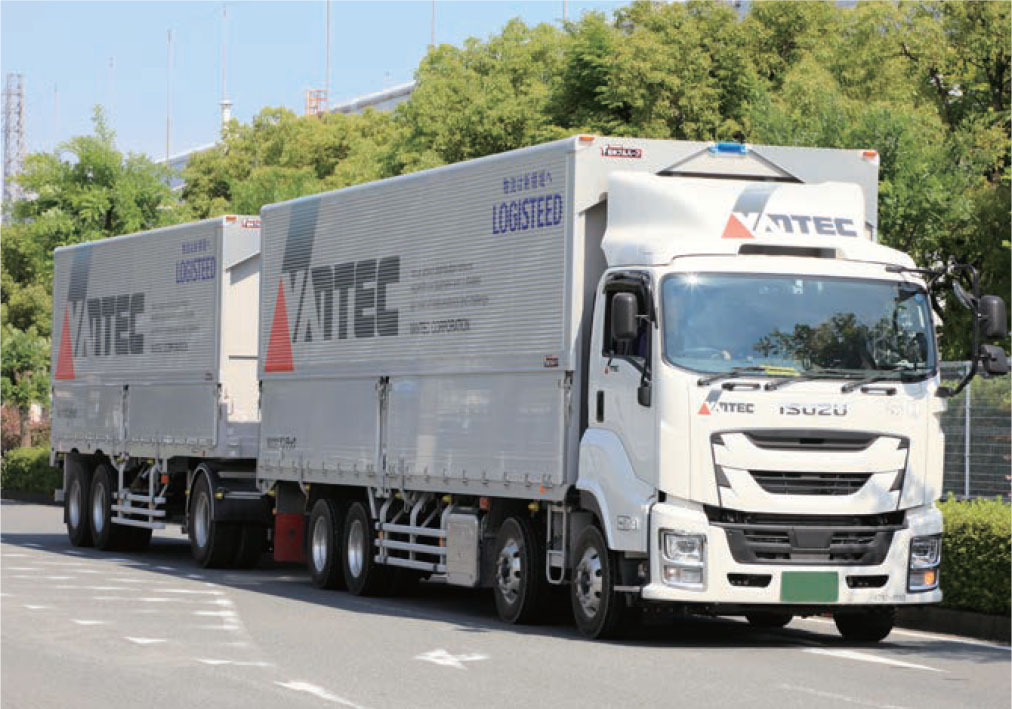
Additionally, since September 2019, we have introduced double trailer trucks to transport JATCO production parts from the JATCO Fuji area to the Kyoto Yagi plant, and transporting at a high load factor led to a reduction in CO2 emissions.
We will continue to pursue this modal shift and work to improve load efficiency to achieve environmentally friendly parts transportation.
CO2 emissions per unit in transportation

FY2024 CO2 emissions due to transport activities

CO2 emissions from logistics(Fiscal year)
| Unit | 2022 | 2023 | 2024 | |
|---|---|---|---|---|
| Total | t-CO2 | 4,166 | 4,344 | 3,795 |
| Inbound | t-CO2 | 2,824 | 2,834 | 2,508 |
| Internal | t-CO2 | 1,262 | 1,422 | 1,223 |
| Outbound | t-CO2 | 80 | 88 | 64 |
Load ratio(Fiscal year)
| Unit | 2022 | 2023 | 2024 | |
|---|---|---|---|---|
| Truck | % | 94.0 | 94.3 | 94.3 |
| Rail | % | 6.0 | 5.7 | 5.7 |
Production area efforts
Consolidation and shutdown
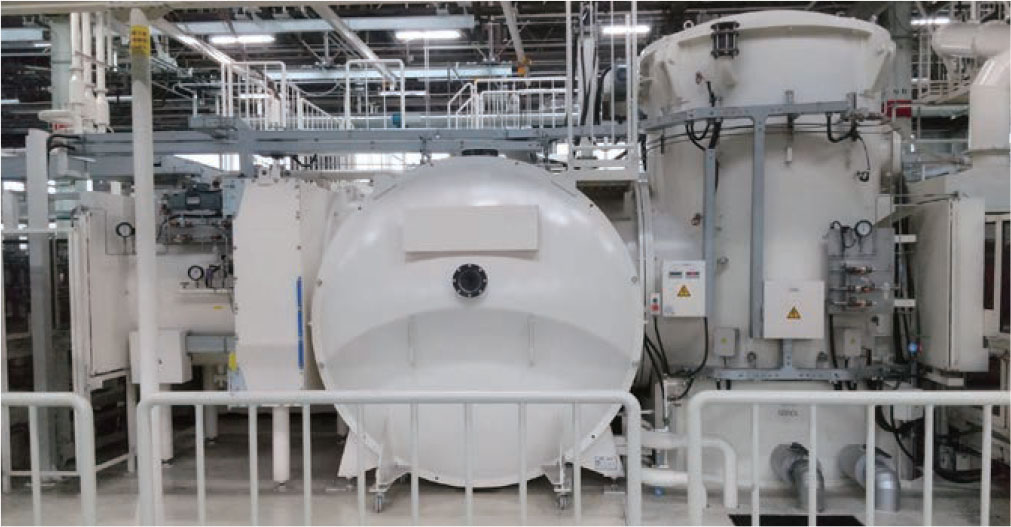
of heat treatment furnacesApprox.
1,659 t-CO2/year
In the plant's heat treatment process, we are managing the load factor of each furnace for quenching and tempering treatments, while also shutting down conventional gas carburizing furnaces with poor efficiency and consolidating operations into vacuum carburizing furnaces.
We are working to reduce CO2 emissions through effcient furnace operation.
Consolidation of molten
metal transportation
at Fuji Area 3 foundryApprox.
820 t-CO2/year
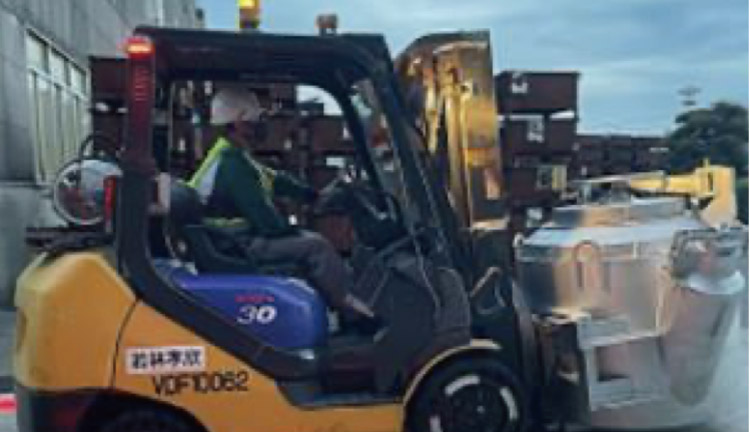
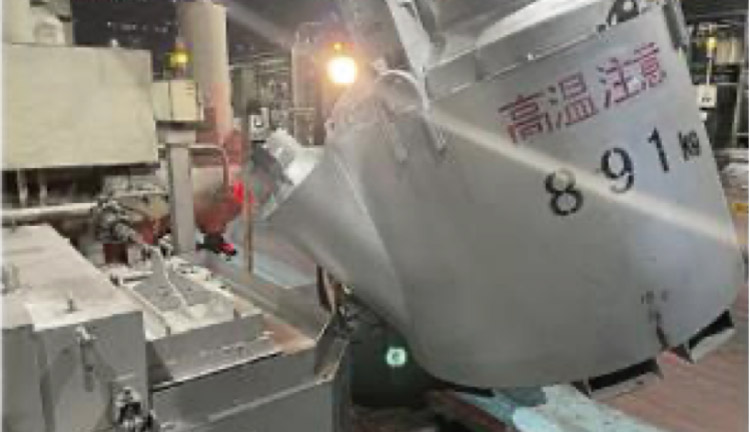
At Fuji Area 3 Plant, each foundry (No. 2 Foundry and No. 3 Foundry) had its own melting furnace, and the molten aluminum was used only within each respective foundry.
By introducing necessary equipment such as pots, we have made it possible to transport molten metal from the No. 2 Foundry to the No. 3 Foundry, achieving improved efficiency through consolidation.
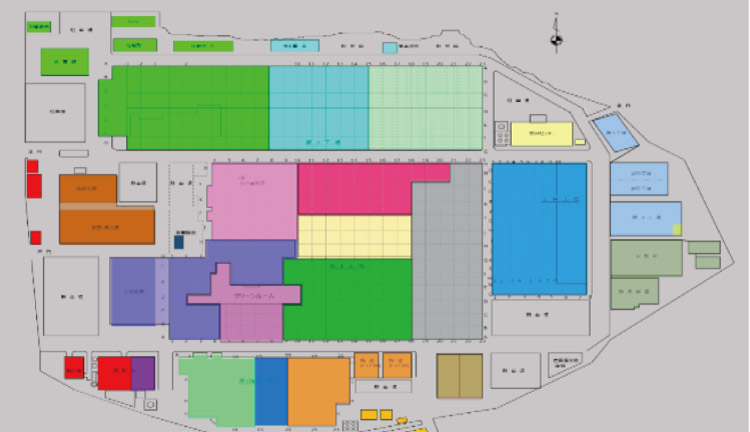
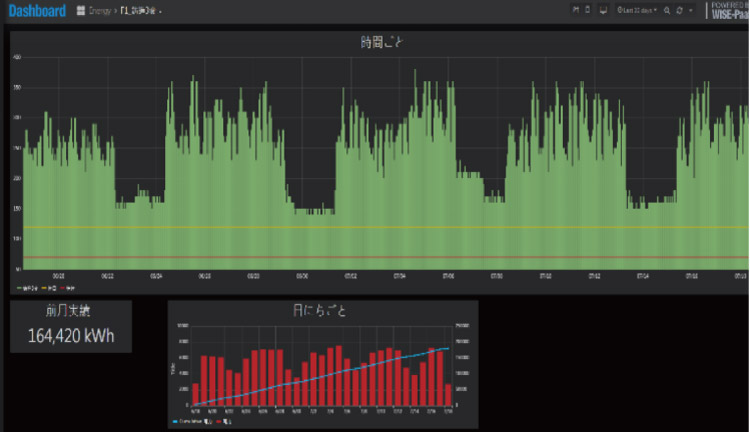
Power consumption visualization dashboard
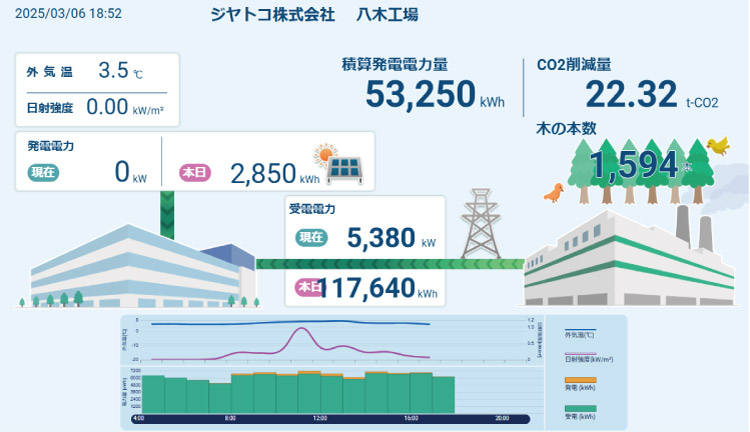
With the aim of raising carbon neutrality awareness, we set up apower consumption visualization system that shows the status of plant power consumption and a CO2 emissions visualization systemon our internal portal site.
All of our employees can easily check the amount of electricity used in each area, thereby leading to self-initiated energy saving.
Optimized steam supply for
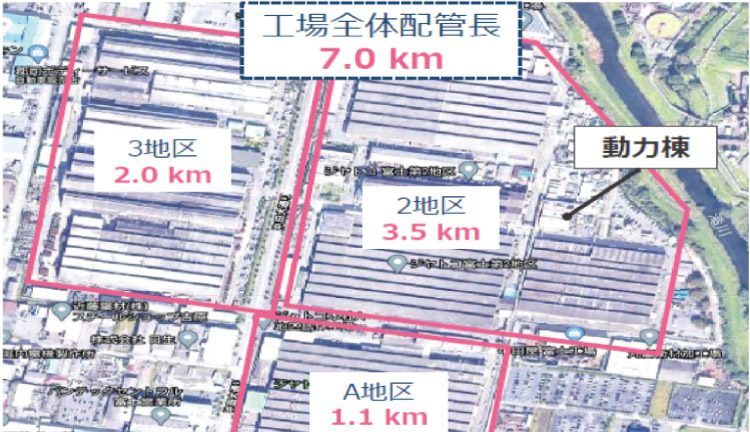
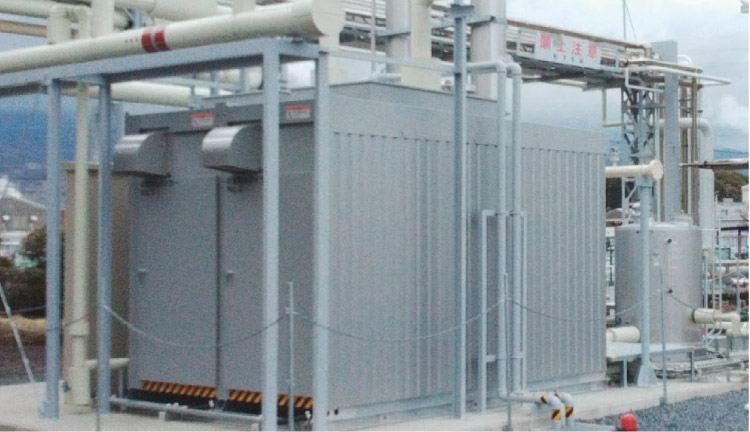
Fuji Areas 2, 3, 4, and A PlantsApprox.
1,081 t-CO2/year
In the plant's heat treatment process, we are managing the load factor of each furnace for quenching and tempering treatments, while also shutting down conventional gas carburizing furnaces with poor efficiency and consolidating operations into vacuum carburizing furnaces.
We are working to reduce CO2 emissions through efficient furnace operation.
Solar carport at Yagi Area
parking lotApprox.
1,659 t-CO2/year
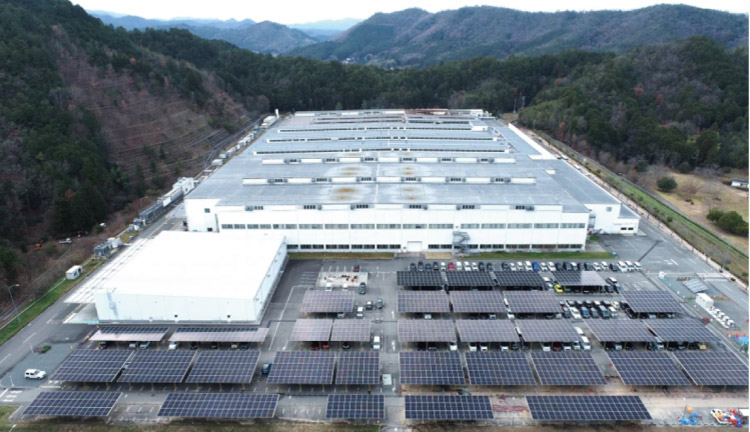
As part of efforts to introduce renewable energy, JATCO has installed a solar carport at the Kyoto Yagi Area parking lot under a solar power purchase agreement (PPA) model.
It is expected to cover approximately 2.8% of the electricity consumed at the facility.
Airless model line
In the new line at Fuji Area 4 Plant, the airless concept was incorporated into the line concept at the project stage and integrated into the equipment design. Some model lines have achieved all-electric operation, with an expected 70% reduction in CO2 emissions. While we have only achieved all-electric operation on some lines at present, we are also adopting the airless concept partially in other lines.

Development efforts
Co-development and production launch of electricpowertrain X-in-1
JATCO is co-developing and producing the electric powertrain X-in-1 for electric vehicles (EVs) with Nissan Motor Co., Ltd., contributing to decarbonization.
Comprehensive efforts
Reuse of Nissan LEAF batteries, solar powered outdoor lighting
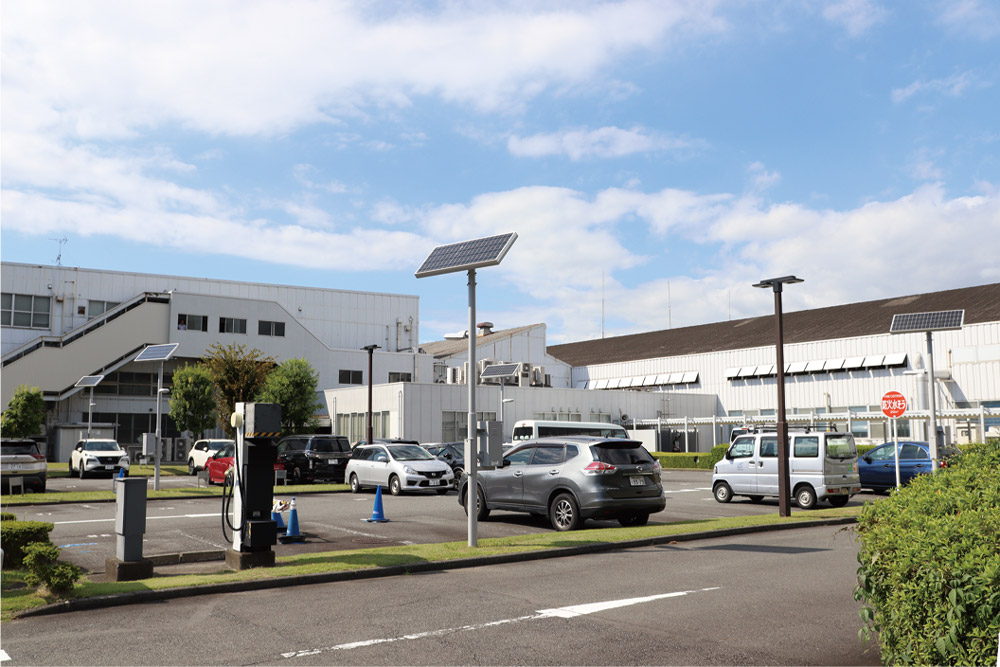
JATCO has changed its Fuji Area 1 Plant and HQ Area outdoor lighting equipment to solar power specifications, achieving zero CO2 through zero commercial power.
The CO2 reduction effect is 0.8t-CO2/year/unit and the storage batteries reuse Nissan LEAF batteries, also contributing to the circular economy.
In an emergency, the batteries can be removed and used as a portable power source for disasters (capacity of 40.000 mA).
Partnership agreement for realizing Fuji City Zero Carbon City
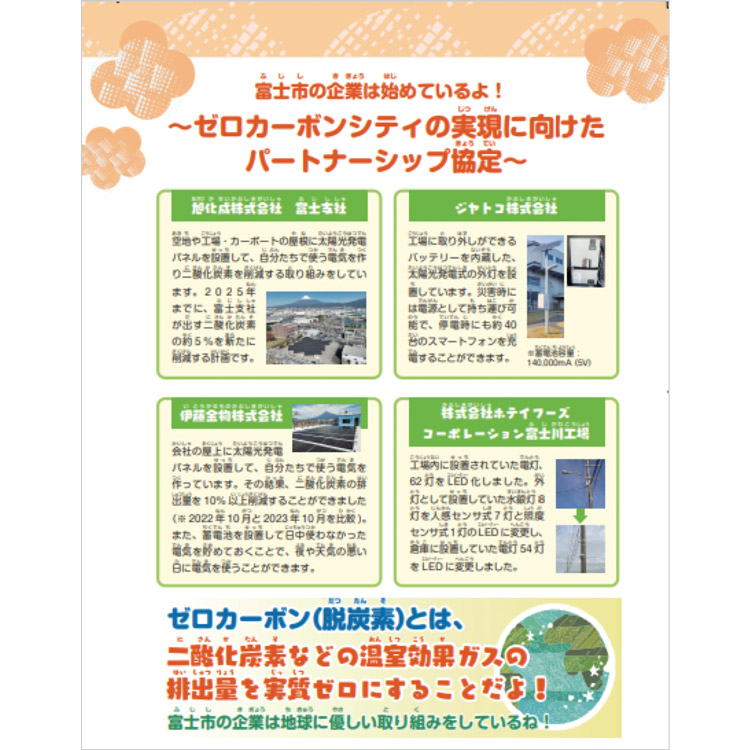
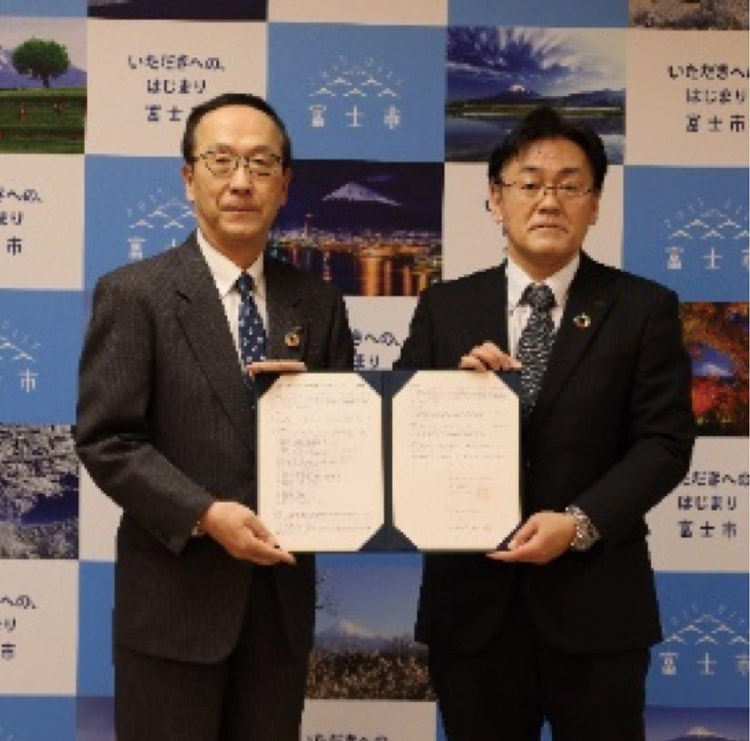
In October 2023, JATCO concluded a Partnership Agreement with Fuji City to realize the Fuji City Zero Carbon City initiative, which aims to achieve net-zero greenhouse gas emissions in Fuji City by2050. We report our greenhouse gas emission reduction targets and results to Fuji City. Additionally, JATCO’s activities are featured in Children’s Zero Carbon Challenge, an environmental awareness booklet distributed to fourth-grade elementary school students in the city.
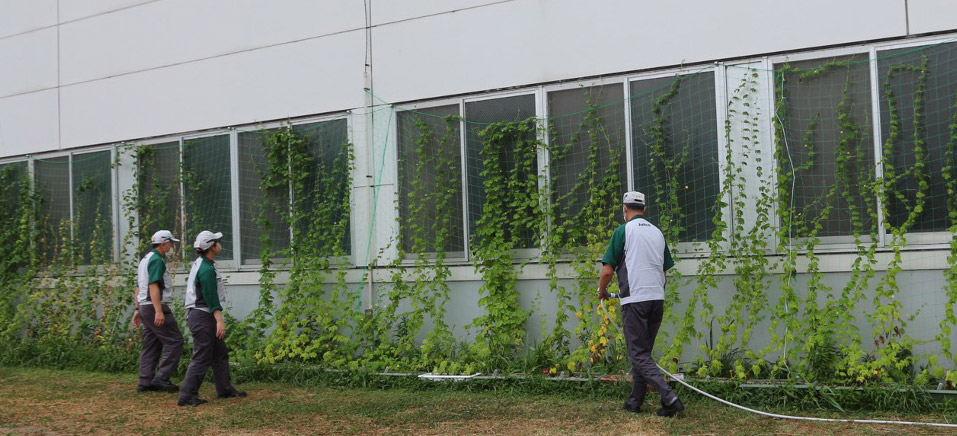
Implementing a green curtain project
At our Yagi Area in Kyoto we are implementing a green curtain project by growing vines around the plant building to block direct sunlight. By using plants to block the sunlight, we are reducing the generation and penetration of radiant heat.
Use of energy-efficient equipment and visualizationof power consumption
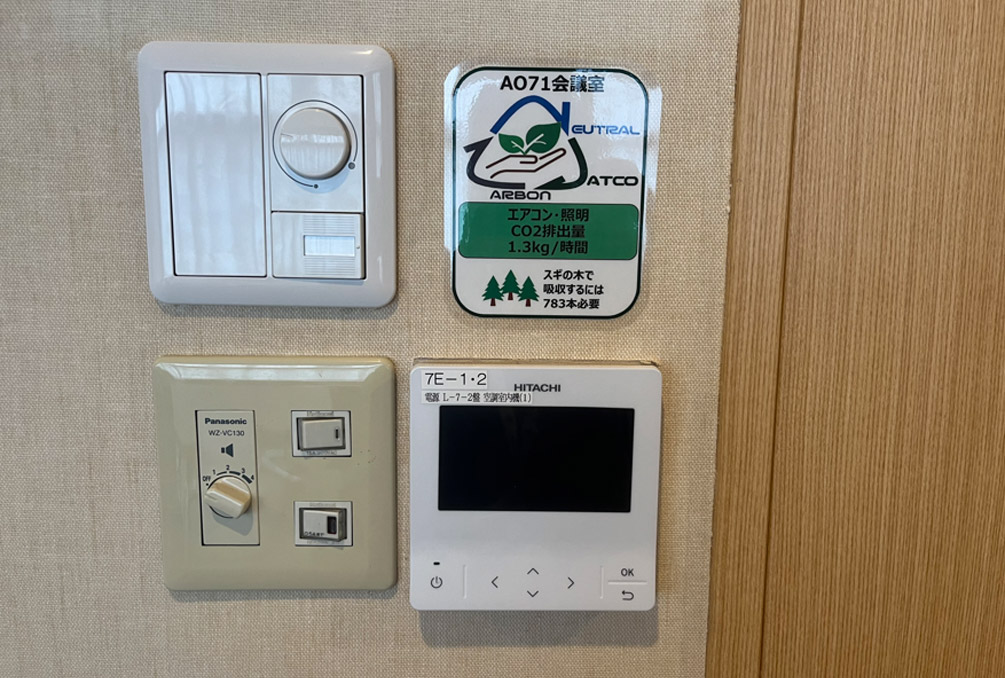
At the Fuji Area office building, we have implemented measures to make it possible to see conference rooms’ CO2 emissions at a glance, thereby promoting activities to enhance energy conservation awareness.