JATCO aims to achieve carbon neutrality in its entire value chain by 2050
Total Product Life Cycle Initiatives
From raw material procurement to final recycling, we evaluate the environmental effects of the entirety of our product life cycles and are tackling the reduction of CO2 emissions from our supply chain and other business activities.
Production Initiatives
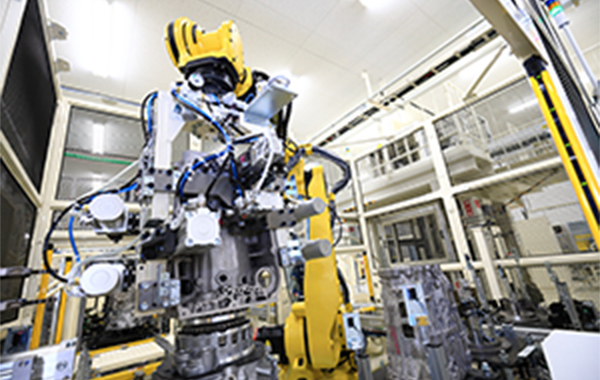
We are working to realize smart factories through innovations in production technologies and by pushing digital transformations (DX), promoting reduced energy usage. Moreover, through the proactive adoption and generation of renewable energy, we are working to reduce the CO2 emissions from our production processes.
Product Initiatives
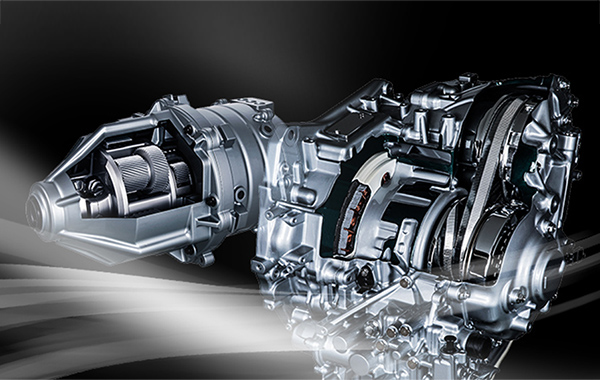
We improve the efficiency of our transmissions to the utmost limit to achieve ever better fuel economies. In addition, with our core technologies, we accelerate the development of products for next generation electric and hybrid vehicles, contributing to the reduction of CO2 emissions.
Environmental Activities and Other General Initiatives
We are driving forward harder than ever with environmental activities such as tree planting in concert with governmental entities, local communities, and NPOs, working as a good corporate citizen to contribute to the reduction of carbon dioxide.

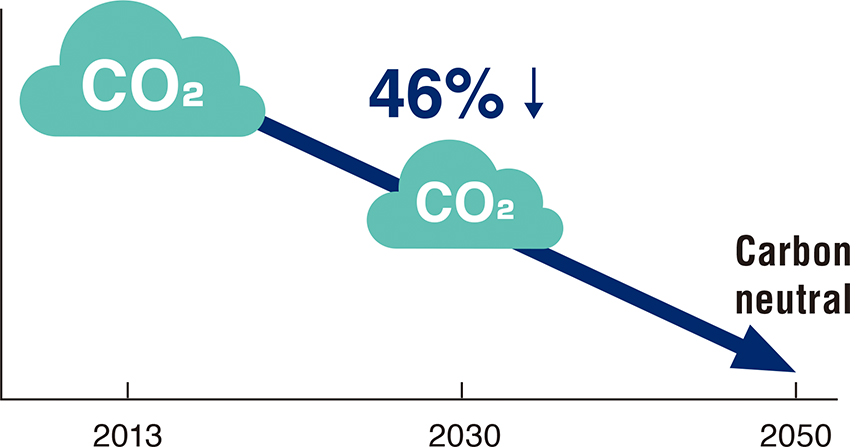
JATCO aims to achieve carbon neutrality throughout its entire value chain by 2050, focusing on efforts in the four areas of total product life cycle, production, development, and environmental activities. As a mid-term target, by 2030 JATCO aims to reduce CO2 emissions by 46% compared to 2013 levels by promoting changes such as switching to electrified forklifts, making effective use of heat treatment capacity, and converting fuel for melting furnaces and aluminum heat treatment furnaces in factories. From 2030 to 2050, JATCO will achieve carbon neutrality by utilizing technologies that directly capture CO2 from the air and by generating its own energy.
Discussions at the Carbon Neutral Steering Committee
Once a month, the Carbon Neutral Steering Committee discusses strategy formulation for and confirms progress towards realizing carbon neutrality. The Committee has the participation of the individuals responsible for total product life cycle, production, products, and environment, and aims to quickly solve problems and invigorate company-wide activities through support and decision-making by reviewers such as our President.
JATCO’s overall life-cycle efforts
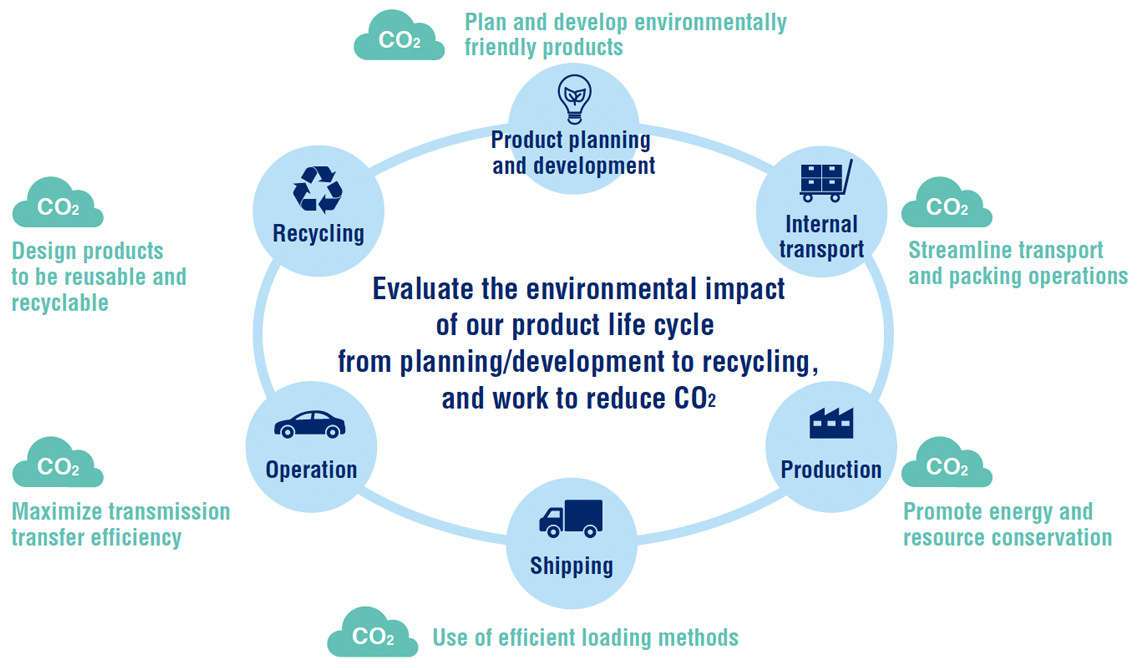
Examples of our company’s initiatives
Working towards a smart factory

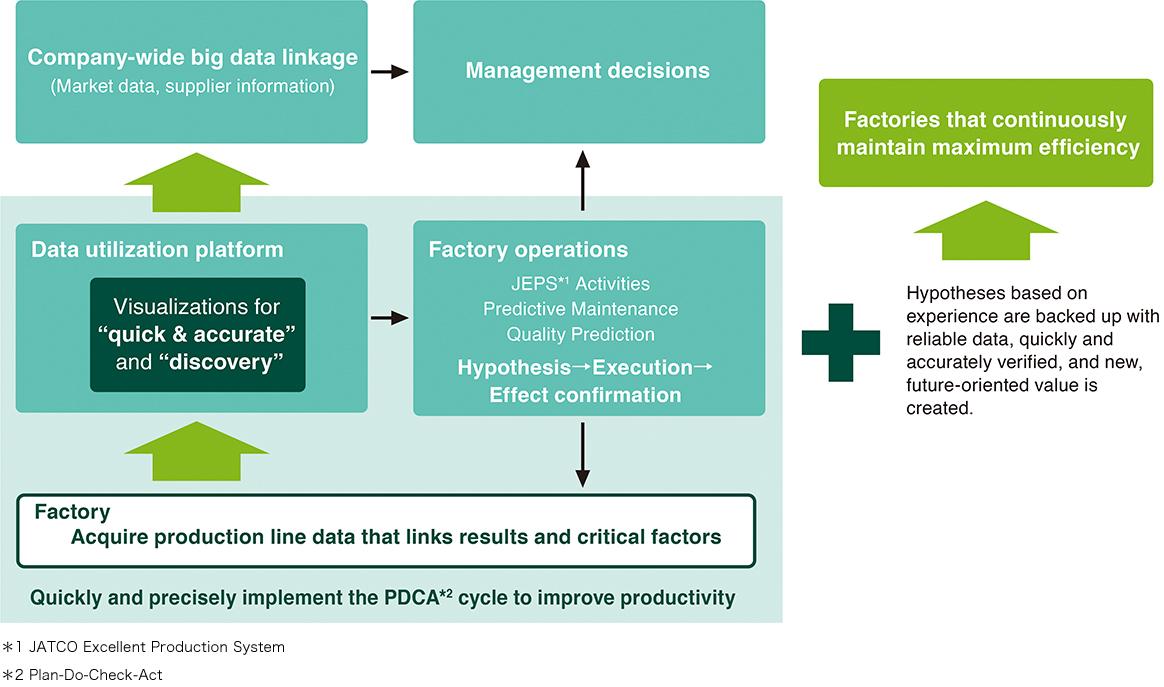
JATCO aims to turn its factories into smart factories. Led by our Digital Innovation Promotion Office established on April 1, 2020, we are advancing DX (digital transformation) in manufacturing and promoting productivity improvements and energy conservation.
JATCO Smart Factory Concept
Visualizing equipment operational status
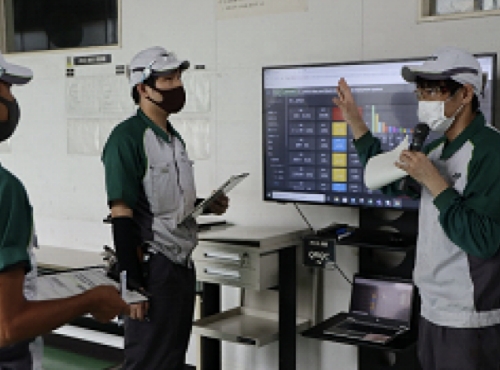
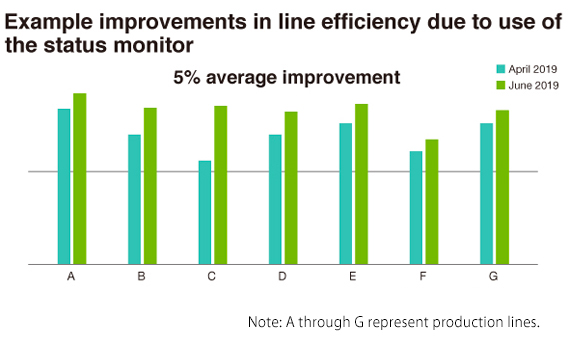
JATCO’ s plants have a system that eliminates any waste by synchronizing the series of processes from material procurement, processing, assembly, inspection, and shipping as if they were a single line. If production stops due to an error, it will affect the next process and then the one after that. In order to eliminate these effects, we aim to create “factories that never stop” by making the state of equipment in the production process visible at all times. Based on QRQC*, which quickly solves quality problems that occur in the workplace, we have created an in-house operation management software that allows us to see our operational status at a glance. This has made it possible to reduce production losses by quickly identifying phenomena such as short stoppages and breakdowns and implementing countermeasures. The introduction of the operational status monitor has improved the efficiency of our production lines by 5%.
JATCO is aiming for the ultimate in efficiency and quality, and by expanding the scope of its digital technology to create a smart factory, we will also contribute to the realization of carbon neutrality by minimizing the energy per unit used to manufacture our products.
*Quick Response Quality Control
Enhancing production and engineering process innovation and inventive technology development
In our development of next-generation technologies, we established the elimination of CO2 emissions as one of JATCO’s principal goals, and have been putting in place initiatives to achieve our goal of zero greenhouse gas emissions by 2050, for both our production and development processes. One of these processes is the one for our latest CVT and vehicle electrification unit.
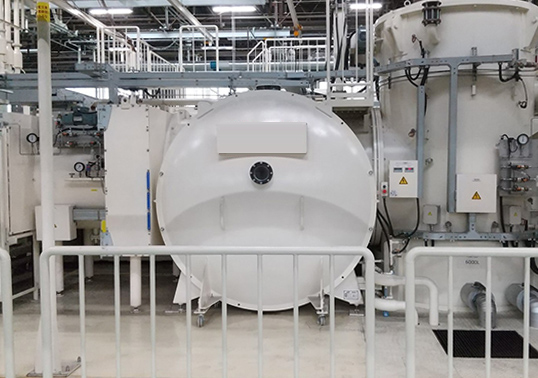
We further reviewed the processes used to date, and succeeded in reducing production lead-time significantly. With regard to our other parts, the development and production divisions are working together to minimize CO2 emissions. Furthermore, we are working towards balancing product performance and improving productivity by promoting “production design,” which gets the production technology division involved in the design of the product from the development phase. We challenge ourselves to achieve ever greater technological breakthroughs, such as the enabling of lower energy use for the production of our products through the purchase of molten metal at the die-casting stage, the abolishment of the shaving process for gear parts, the development of a next-generation vacuum carburizing furnace, the reduction of the weight of units through the use of alternative materials and thin-walled die-casting, and the downsizing of casting machines.
Preserving Earth’s environment through
cross-industry collaboration

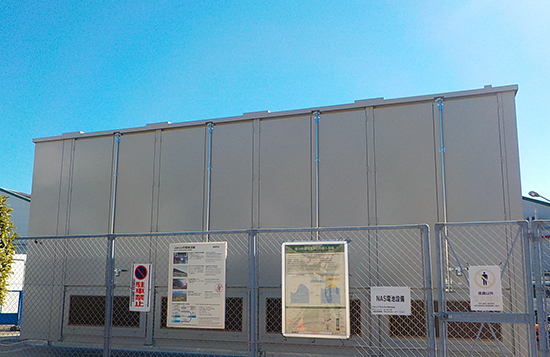
JATCO is actively pushing its collaborations with companies from different industries as part of a new initiative for preserving the Earth’s environment. Since FY2005, we have worked jointly with TEPCO Energy Partner, Incorporated, to introduce NaS battery* facilities. The NaS batteries charge at night when power consumption is low, and this electric power is utilized during the day when load is high. This helps to reduce excess operation of power plants and brings about efficient power consumption. In FY2020, we upgraded our equipment, and when the power companies are short on power, we release stored power, contributing to the stability of power supply and demand. *NaS battery: A storage battery composed of liquid sodium (Na), liquid sulfur (S), and special ceramics
Implementation of a modal shift
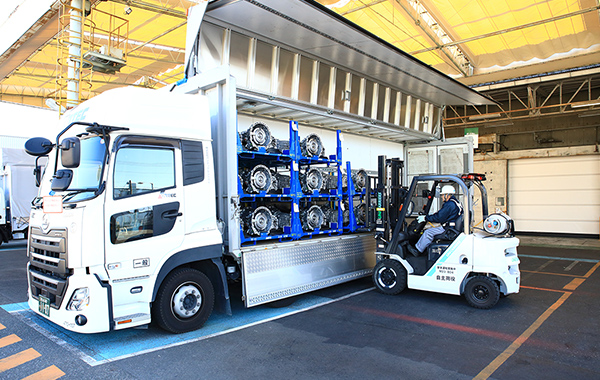
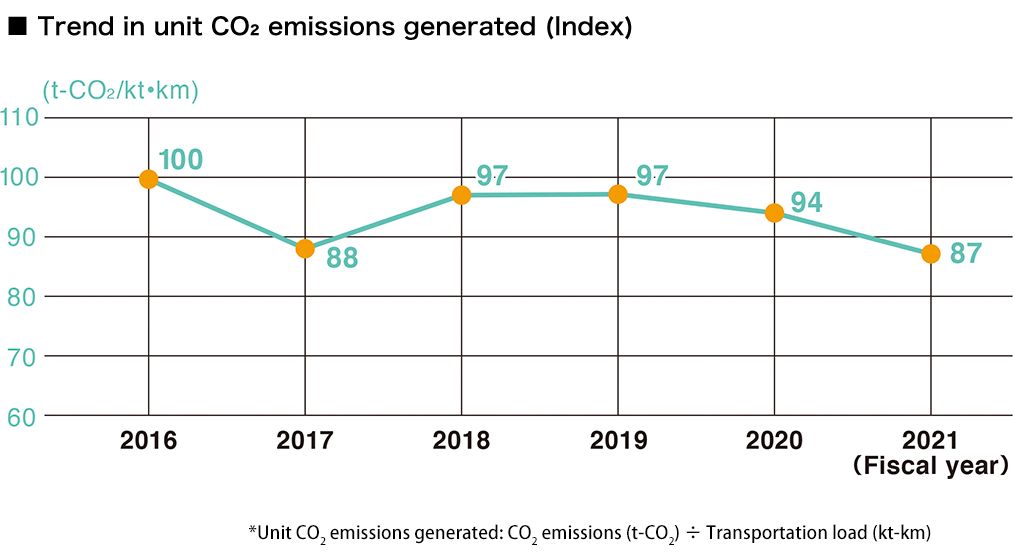
JATCO utilizes green logistics with the aim of reducing our CO2 emissions and has achieved an average reduction of 13% per year in the five years since 2016. In order to reduce the CO2 emissions due to the transportation of our parts, we have been implementing a modal shift in our logistics, while gaining the acceptance of our customers in Japan. Specifically, we switched from using trucks to using railcars for the transportation of procured parts to JATCO’s production bases in Shizuoka, starting from FY2005 for the route from Hiroshima (approximately 780 km away). As a result, we were able to reduce our CO2 emissions by 83.3%.
Additionally, since September 2019 we have introduced double trailer trucks to transport JATCO production parts from the JATCO Fuji area to the Kyoto Yagi plant. Transporting at a high load factor led to a reduction in CO2 emissions.
We will continue to pursue this modal shift and work to improve load efficiency to reduce the number of trucks and other vehicles used for shipping.
Educating employees through the use of environmental content

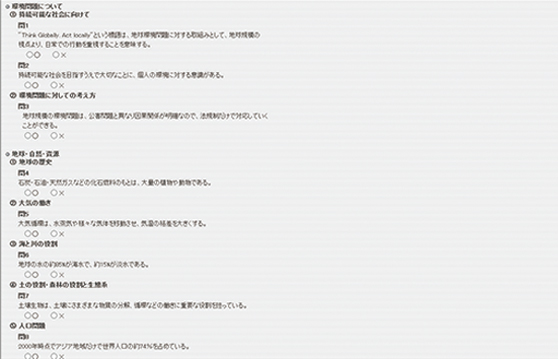
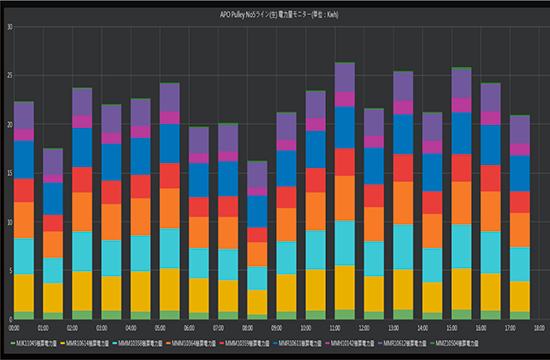
With the aim of raising environmental awareness among employees, we set up a dedicated environmental topics webpage on our employee portal site. In addition to encouraging employees to participate in conservation events both within and without the company, we post content, such as JATCO’s unique eco certification and eco-drive certification, to help employees learn about environmental issues in a fun and enjoyable manner. There is also a section with visualizations of our power consumption, which sheds light on our actual power consumption, and a section on electrical cost reduction, which provides information about energy conservation. All of our employees can easily check the amount of electricity used in each area, thereby leading to spontaneous energy saving.
Adoption of solar power systems and
roof greening initiatives

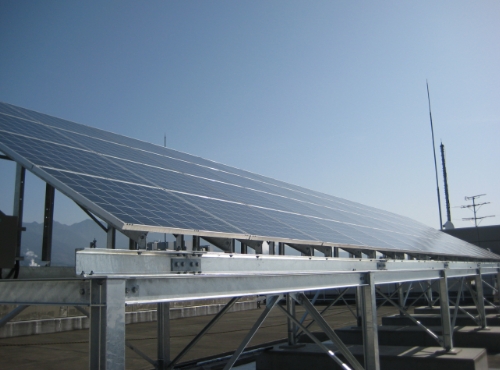
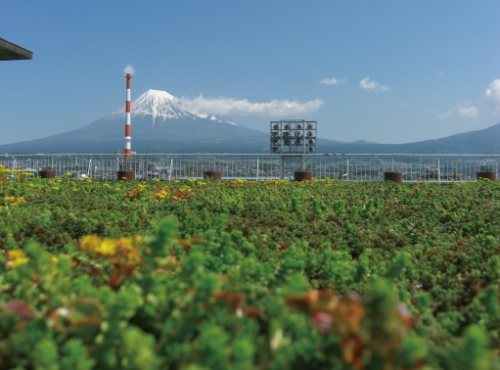
JATCO has installed a solar power system (10 kW), on the rooftop of our head office in Fuji City. The power it generates is used to drive the air-conditioning equipment. We have also carried out roof greening initiatives that make use of the reduction of building temperature brought about by plants to reduce the amount of power consumed by air-conditioning facilities during summer. In FY2020 we reduced CO2 emissions by approximately 5 metric tons.
Contributing to environmental conservation
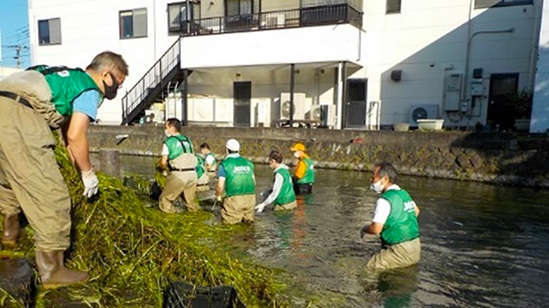
JATCO promotes environmental activities in collaboration with the government, local communities, and NPOs. For example, we cut the aquatic weeds in the Tajuku River that flows through Fuji City. If left unattended, trash can accumulate in the weeds and raise the water level, which causes flooding. We will continue to contribute to environmental conservation as a good corporate citizen so that residents in the surrounding areas can live with peace of mind.
Using virtual evaluations to reduce
environmental load
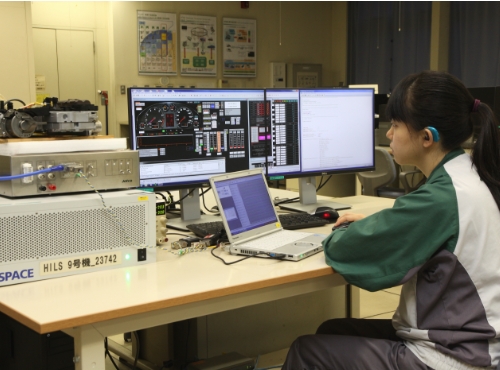
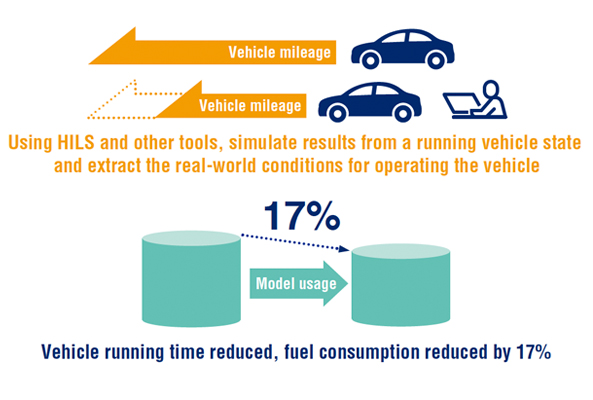
By using computer simulation to predict the phenomena that occur in each functional component when a car is actually driven, we are replacing what had previously been our real-world vehicle tests with virtual experiments (HILS*, etc.).
In addition, by checking the new control system virtually, it has become possible to develop it without having to rework it when it is installed in an actual vehicle.
By proceeding with these virtual evaluations, not only is the development period shortened, but also the number of experiments using actual vehicles are reduced, leading to positive environmental effects such as reduced prototyping and reduced use of fuel for experiments.
In addition, by applying the systems engineering methodology to our existing and next-generation products and expanding it globally, it is expected that our rework rate will be improved by 50%, which will not only shorten the development period but also reduce the amount of gasoline used by reducing the number of physical experiments.
*Hardware In the Loop Simulation