Concept
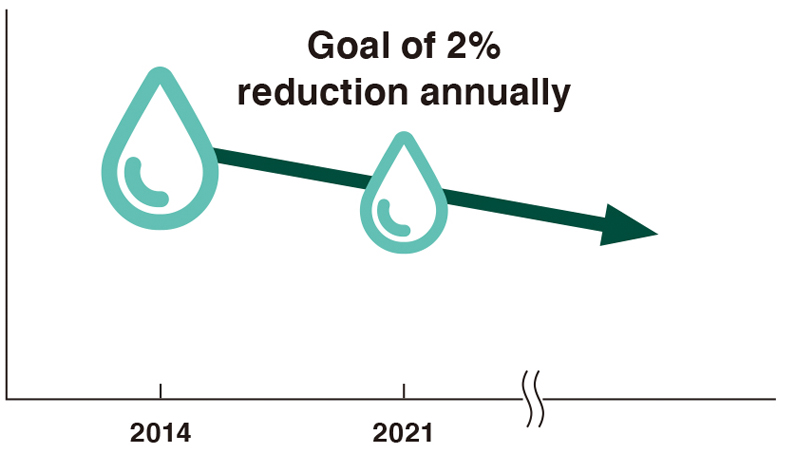
JATCO tracks the amount of water used for production at our plants and is working to reduce it. In accordance with the “Nissan Green Program” formulated by our parent company, Nissan Motor Co., Ltd., we have been working on a comprehensive reduction of our water consumption since fiscal year 2014 as a countermeasure against global water depletion. With the goal of reducing the amount by 2% every year, we achieved a reduction of 32.9% in fiscal year 2021 compared to fiscal year 2014.
Examples of our company’s initiatives
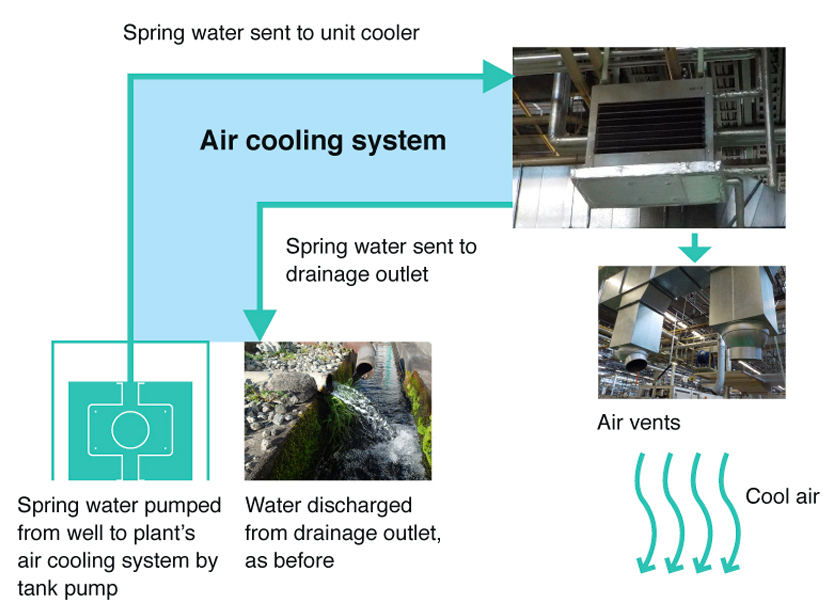
Mt. Fuji spring water cooling
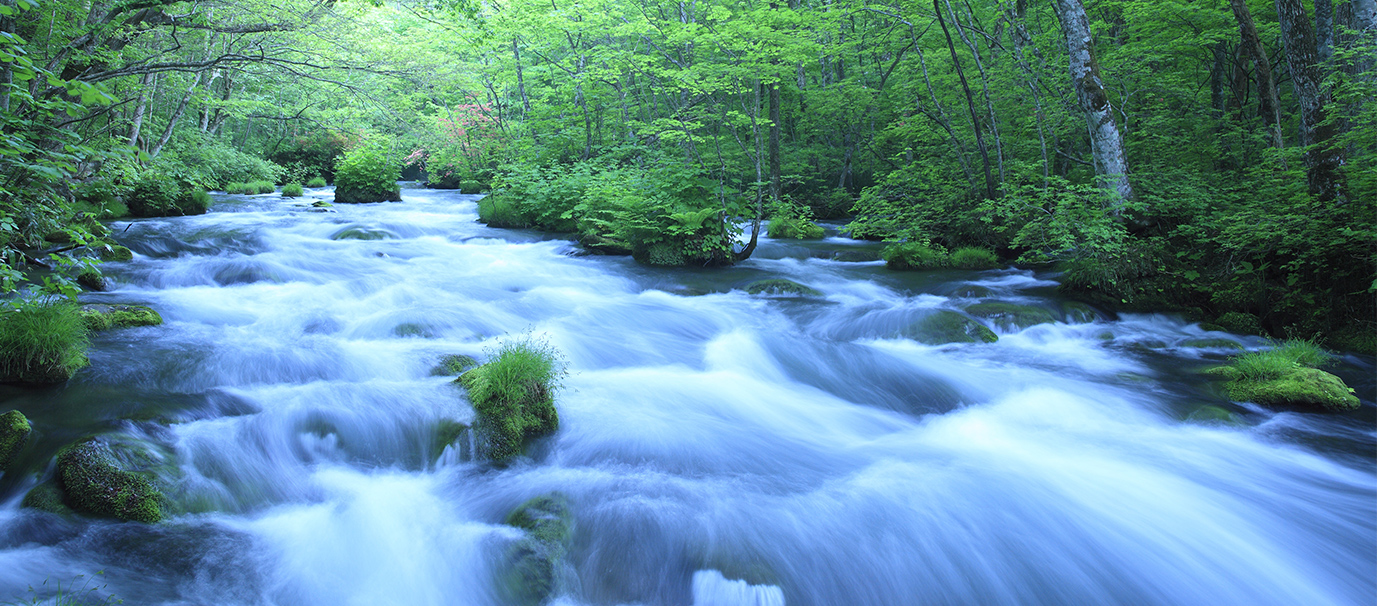
There is a natural spring within the grounds of Fuji Area 1 Plant at the foot of Mt. Fuji. This water used to be discharged through a drainage outlet, but since the temperature of the spring water stays at 15–17 degrees Celsius all year round, we use it as a natural cooler via the plant’s cooling air system.
Maintaining high standards of purification
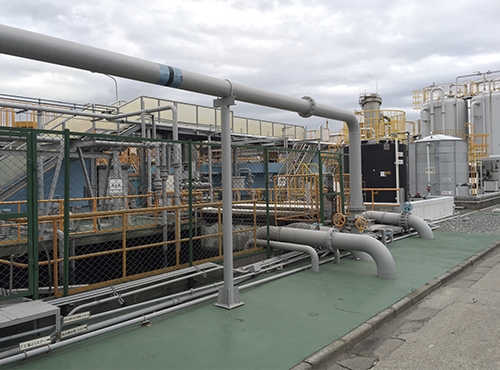
JATCO’s production plants not only comply with the standards for water discharge established by national and municipal governments, but have also drawn up even more stringent purification standards for internal use. By combining facilities for activated carbon adsorption, ultrafiltration, high-speed aggregation precipitation, contact oxidation, sand filtration, and pressure flotation, we continue to maintain a high level of purification quality. Furthermore, we have installed water-saving valves on the water faucets at each of our domestic offices to reduce our water usage.
Reusing discharged water through the adoption of cold water circulation equipment

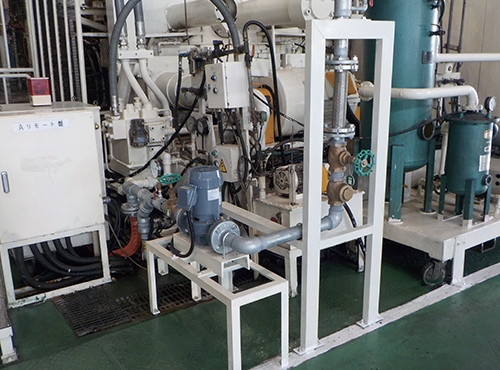
JATCO promotes the reuse of discharged water, and has adopted the use of cold water circulation equipment to purify the water used for the cooling and cleaning of production equipment, as well as for the thinning of cutting oil.
Implementation of rainwater measures
Rainwater that falls on the premises of our production plants is discharged through drainage outlets directly into rivers. Employees use cameras to monitor the drainage outlets at all times to prevent rainwater that has been polluted by oil and grease from roads and buildings on the premises from flowing into rivers.
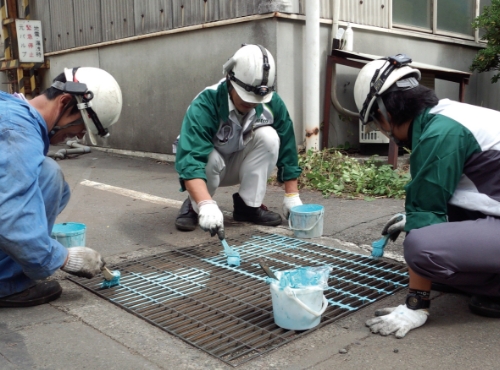
To enable prompt identification of the drainage outlets, employees have manually color-coded the outlets. This not only prevents the accidental use of these drains for polluted water, but also raises awareness among all employees that these drainage outlets lead to rivers.
In the unlikely event that oil leakage from employees’ cars or from vehicles transporting parts and products within the premises should flow into the drainage outlets, gates have been installed where the drains connect with rivers in order to prevent these pollutants from flowing through.
Safe and reliable transportation of polluted water
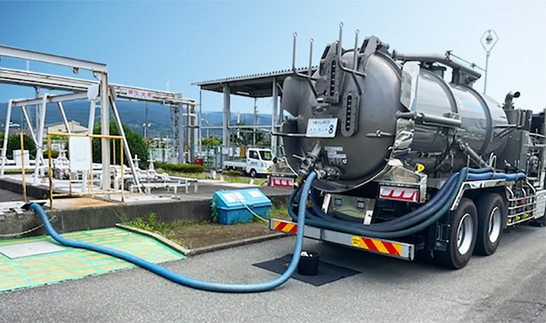
JATCO not only takes steps to reduce the incidences of water pollution, but also considers safety when transporting polluted water to treatment facilities. Measures have been put in place at the facilities where parts are cleaned to enable the repeated reuse of water after pollutants have been removed from it. After reusing this water for several months, it is then transported to a treatment facility by truck. Given the fact that transportation of polluted water to treatment facilities through underground pipes and gutters is method that is easily impacted by the passage of time and has reliability issues, we are also making improvements by switching to transportation of this water using aboveground pipes that are visible to employees.